
Introduction: Part III
The Time Machine.

Read the previous part here.
My goal was to engage myself in the process and relax from work, turn off my inner perfectionist, even while setting specific challenges for myself. I learned to ignore my own standards and simply enjoy the process, especially when the main thing was just to seize the moment.
And I finally realized what music truly is to me: a time machine.
Music has an amazing ability. It can evoke memories, take you back to where you first heard a track, bring back the sensations you experienced at that time, and sometimes even recreate smells or long-forgotten details. But there’s one thing it can’t do—completely transport you to that moment. Instead, it constantly reminds you that it’s gone and will never return.
That's why I treat my solo music not as a product or some kind of statement, but as something like a personal photo album. The most important thing for me is to forever capture the moment of recording a track—the feelings and experiences I had while writing it—so that even after many years, I can listen and mentally return to that time.
And it's strange how music can often capture much more than videos or photos, especially when you create it yourself. Even stranger is how such music attracts people who haven't experienced the same spectrum of emotions yet still resonates with them so deeply that they associate it with their own moments, feelings, and experiences.
So my main challenges, which greatly contributed to my focus on quickly capturing the moment, were the very limited number of effects even in a DAW (mostly equalization, compression, and saturation), recording in a maximum of three takes, and conducting an experiment by writing lyrics in Russian. I have a very complicated relationship with the Russian language since childhood, now it has become even more complicated because of the Russian invasion of Ukraine, but I needed experience with such a contradictory language, especially when it's not particularly musical (especially compared to English). All of this led to very interesting results.
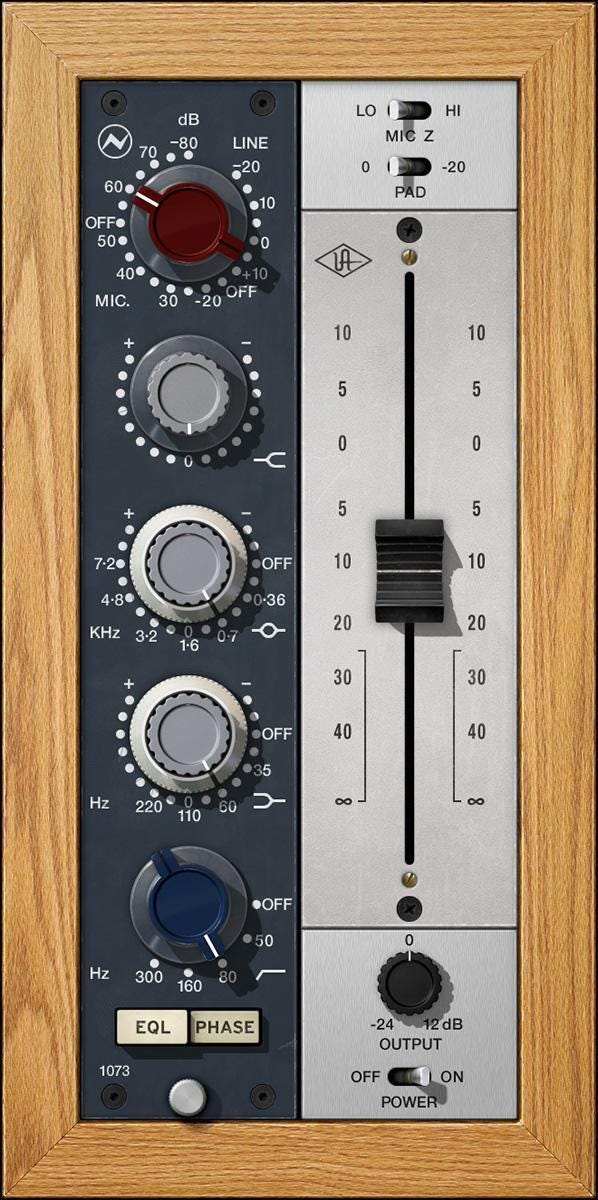
By using mostly clean sound, my playing style on instruments began to change significantly. Recording only the first three takes not only helped capture the moment in its purest form, but it also greatly improved my technique and performance skills. The complexity of the Russian language taught me to think differently than when writing in English, as well as to shape rhythm and intonation in a new way.
I learned valuable lessons from this and now apply them to writing tracks in English as well. And a funny thing: whereas before, I always tried to complicate tracks, experimenting with time signatures, making them long, and piecing them together from many dissimilar parts. Now, on the contrary, I simplify everything I can. I often use loops and samples or maintain an unchanging element throughout the entire track, and I keep them no longer than three to four minutes in 4/4 time. I don't know what influenced this shift more, my personal challenges or modern cultural reality and standards, but most likely both.
And even though I now set less radical challenges for myself, and they don’t change my writing process as much, I feel like each one brings something new to me and helps make my material sound distinct from my other work.
These were the key moments and things that shaped me before the 2020s. Now that you know a little bit about my background, I can tell you about my current projects and why I started writing on Substack.